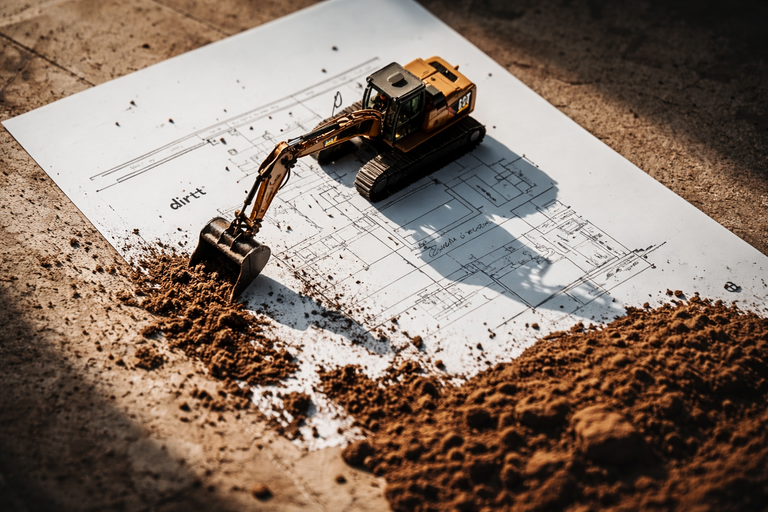
Design–Construction Alignment in Practice
Why projects succeed—or fail—long before ground is broken.
In construction, failure is rarely dramatic. It is cumulative. A missed assumption. An unresolved detail. A drawing interpreted differently in the field. Individually, these issues appear minor. Collectively, they erode budgets, schedules, and confidence. At the root of many project challenges is a single issue: misalignment between design intent and construction reality. Design–construction alignment is not a theoretical ideal, it is a practical discipline. When executed deliberately, it becomes one of the strongest safeguards against cost overruns, delays, and compromised quality.
What Design–Construction Alignment Really Means
Design–construction alignment is the continuous verification that what is being designed can be built efficiently, safely, and as intended, using available resources, methods, and constraints.
It extends beyond coordination drawings or compliance checks. True alignment asks harder questions:
Can this detail be executed reliably on site?
Are tolerances realistic for the specified materials?
Does the sequencing support structural integrity and safety?
Have constructability risks been identified before they become site instructions?
Alignment is achieved not at a single milestone, but through deliberate decisions made early, and reinforced consistently.
The Cost of Misalignment
When design and construction drift apart, the consequences are predictable. Redesigns emerge mid-construction. Temporary works multiply. Site teams improvise to meet intent that was never fully resolved.
These are not execution failures; they are planning failures. Most claims, variations, and schedule slippages trace back to assumptions that were never stress-tested against construction realities.
The most expensive problems are often invisible at the start, until they surface when change is least affordable.
Alignment in Practice: Where It Is Won
In practice, design–construction alignment is established in three critical moments:
1. Early Visualization
Digital modeling allows teams to interrogate geometry, interfaces, and sequencing before physical constraints apply. Visual clarity reduces interpretive risk and exposes conflicts while solutions remain inexpensive.
2. Constructability Review
A constructability review translates drawings into execution logic. It evaluates access, lifting strategies, material availability, tolerances, and safety implications, ensuring that design decisions remain grounded in site conditions.
3. Continuous Coordination
Alignment does not end at approval. As construction progresses, design intent must be actively protected through disciplined coordination, responsive clarification, and controlled change.
Why Alignment Protects Value
Projects that prioritize alignment experience fewer surprises, smoother execution, and more predictable outcomes. Quality improves not because standards are higher, but because ambiguity is lower.
For clients, alignment translates into confidence, confidence that what was approved is what will be delivered, and that investment decisions are supported by technical clarity rather than assumption.
A Discipline, Not a Phase
Design–construction alignment is not an optional service or a late-stage correction. It is a mindset embedded into how projects are planned, reviewed, and executed.
When alignment is treated as a discipline, complexity becomes manageable. Risk becomes visible. And construction returns to its fundamental purpose: delivering durable, safe, and intentional outcomes.
At MIC, alignment is not assumed, it is engineered.